
Where gods whisper and empires rot.
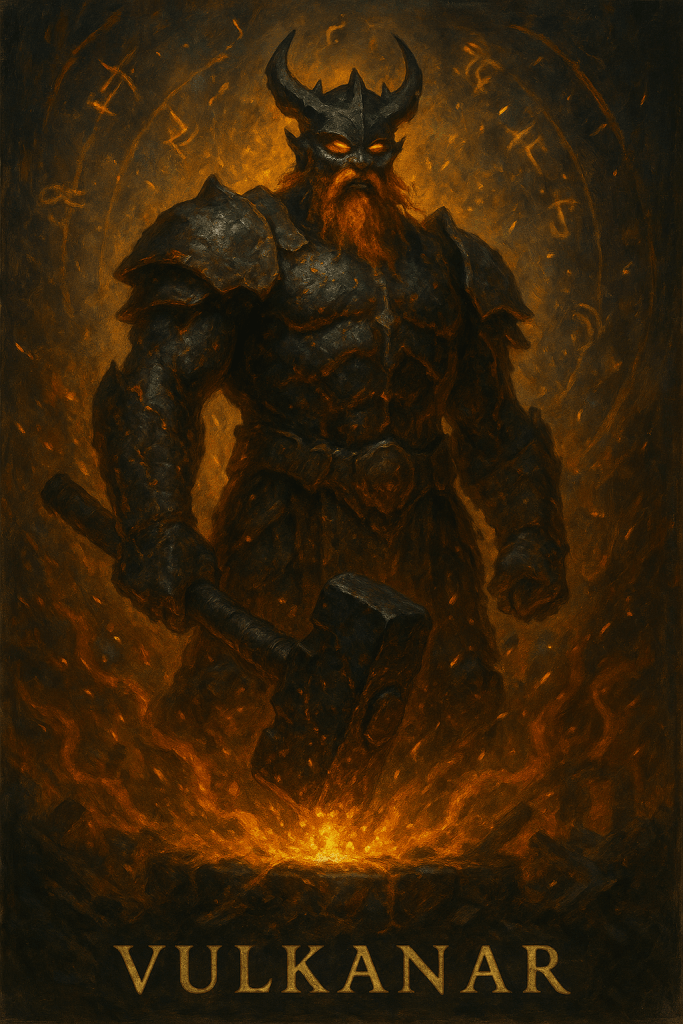
Title: The Anvil Lord, Flame-forged Father, Hammer of Transformation
Alignment: Order through Fire, Strength through Craft, Fury with Purpose
Dominion: Forge, Creation, Fire, Discipline, Invention
Symbol: A hammer striking an anvil, encircled by embers
Sacred Artifacts: The Eternal Forgeheart, The Hammer of First Flame, The Binding Tongs of Aeons
Divine Domain: The Ashen Crucible (Second Dimension)
Servants: Emberborn Titans, Forgewraiths, Hammerpriests, Runesmiths of Flame
Opposed Powers: Larythis (chaos of desire), Thanarok (entropy), Virekos (madness without function)
Worshippers: Blacksmiths, inventors, dwarves, golemancers, battle-engineers, disciplined warriors
Divine Biography
Vulkanar was born of discipline ignited by necessity — the only god forged rather than sung into being. When the First War split the divine realms and the Celestial Rift threatened to shatter creation, it was Vulkanar who answered not with words, but with fire and steel.
From the core of the Second Dimension, he forged the bindings that sealed the fractures of existence. It is said that he built the first weapons, the first walls, and the first prisons — all with hands that bled molten fire. He did not fight for power. He fought to preserve the structure of the cosmos.
His allies see him as a stalwart bastion. His enemies call him a fanatic of flame and rigidity. But all agree: where Vulkanar’s hammer falls, the world is reshaped.
Nature and Appearance
Vulkanar appears as a towering titan clad in obsidian-blackened armor, with cracks glowing like magma beneath the surface. His flaming beard, horned helm, and runed hammer blaze with divine intent. Every strike of his weapon echoes with the weight of law, of permanence born through pressure.
He is silent when watching. Loud when working. Furious when wasted.
Vulkanar does not punish mistakes — he melts them down and reforges them.
Cults and Worship
Temples to Vulkanar resemble great forges, foundries, or subterranean sanctums where flame never dies. His rites are ritualized acts of creation — forging blades, binding constructs, carving runes, tempering steel. His high priests are masters of discipline as much as of metal.
Rituals include:
- The Trial by Fire: to prove one’s endurance and resolve
- The Ember Oath: a pact sealed with molten iron
- The Smelted Soul: a rite of personal transformation through work and sacrifice
To worship Vulkanar is to shape oneself as one shapes the blade — with intent, pain, and purpose.
Legacy in Astravara
Vulkanar is revered by dwarves, smiths, and those who know that nothing worth keeping is ever made easily. His name is carved into the foundations of fortresses, etched into the cores of golems, and whispered by those who forge weapons not for war, but to prevent it.
He is feared not for wrath, but for unyielding expectation.
It is said that in the Final Hour, when all gods falter, Vulkanar will stand alone at the center of the world, hammer in hand, ready to rebuild what others allowed to fall.
He is not mercy. He is not chaos.
He is what endures — because it was built to.
 Chronicles of Astravara